This event has been ended!
Studne mútne: umelecká kolaborácia 1939-1945, uvedenie novej knihy Petra Gettinga
Muddy wells: artistic collaboration 1939-1945, launch of a new book by Petr Getting
Event by: Vydavateľstvo Artis Omnis, Nová synagóga Žilina
Location: Nová synagóga Žilina, J. M. Hurbana 220/11, Žilina
Tickets: Get tickets
About event
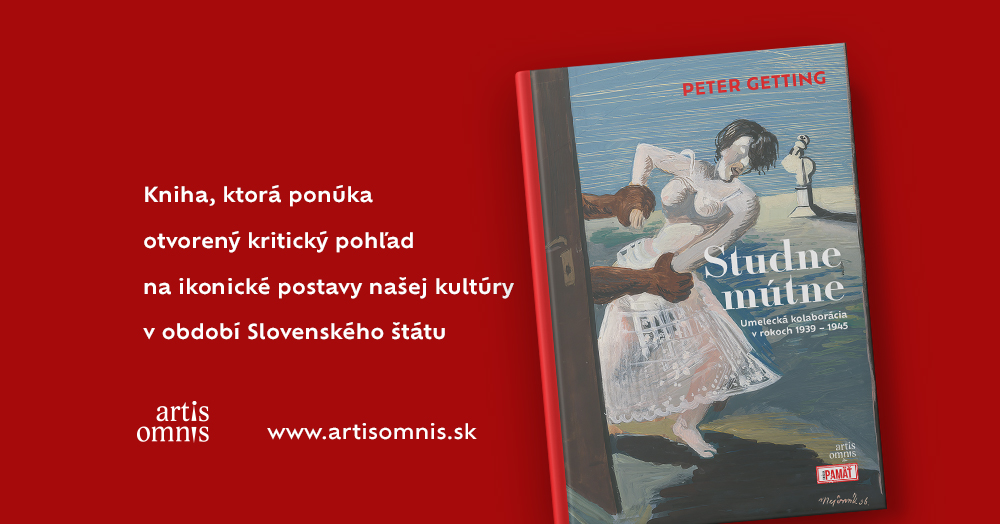
A book that offers an open critical view of the iconic figures of our culture during the period of the Slovak state.
> 20 years of work in archives, searching, researching, searching,
> 360 book pages,
> 900 footnotes
> hundreds of documents and citations
Peter Getting publishes Studne mútne (Artistic collaboration in the years 1939-1945) in the Artis Omnis publishing house, and we invite you to a personal presentation of the book and a discussion with the author and publishers Ivan and Andrea Harman.
They are iconic figures of our culture. They built statues and named streets after them, they have their unquestionable place in the lexicons of literature and textbooks, Slovak modern art cannot be imagined without them.
Peter Getting, however, also reveals a different image of famous Slovak writers and manifestations of artistic collaboration with the regime during the wartime Slovak state. It maps and names the activities and fates of authors and their works in the face of the mechanisms of power and arrives at findings that have been kept silent for decades, including the participation of the artists themselves in the installation, existence and support of a regime that violates basic human rights and commits crimes against humanity.
"While we understand the regime in Slovakia in the years 1939-1945 as totalitarian and criminal, the intention is to point out what role Slovak literati, poets, writers and publicists had in this crime. Of course, totalitarianism would have existed even without their support, but we must draw attention to the little-known - be it unintentionally or intentionally - bypassed fact that with the help of a shocking part of the Slovak literary this path was paved much easier than we admit today. It was also the collaboration of those who are stereotypically titled as the 'conscience of the nation' and the 'wells of our culture.' Peter Getting
In March 2026, 87 years will pass since the establishment of the Slovak State. This chapter of our history is still not sufficiently reflected by the Slovak public. Among other things, the regime at that time relied on acceptance and support from the elites of social and cultural life. It was on this aspect that publicist Peter Getting focused his attention. His book is stimulating and the first publication of its kind in Slovakia, which deals with the situation in literary circles in the years 1939-1945, with an emphasis on artistic collaboration with the then fascist regime.
"The author explores a very sensitive, important, but neglected topic, which is sometimes very painful for society's consciousness." Ivan Kamenec, historian
The author relies on his own research and the findings of researchers, brings numerous citations from the works and contemporary press, documents and photographs that point to the moral failings of the social elite. At the same time, he also notices the manifestations of defiance, the consequences of disagreement, and also touches on the broader problem of artistic collaboration with totalitarian regimes in the context of our modern history.
"Truth is not always pleasant and bearers of such truth are not usually appreciated. But that is precisely why the book of truth about the collaboration of Slovak artists with the authoritarian regime of the Slovak wartime state deserves attention. For the courage with which he fully reveals the truth. But also for the precision with which he examines not only old source materials, but also still living human stories through them." Peter Darovec, literary scholar
A book can raise new questions, stir up passions, but also play a purifying function and expand knowledge about hitherto hidden or overlooked facts about Slovak literary figures. It thus has a chance to contribute to the necessary self-reflection and de-taboo chapters of history.
Peter Getting (1975) is the author of the short story collections Cages (2007) and Errata (2014), the novel Mrchovisko (2010), the novella Bludné kamene (2017) and the collection Broken Legs of Ballets (2018). He has been working as a journalist and columnist in various opinion-forming media for more than twenty years. He also participated in several independent campaigns of an artistic and social nature.