This event has been ended!
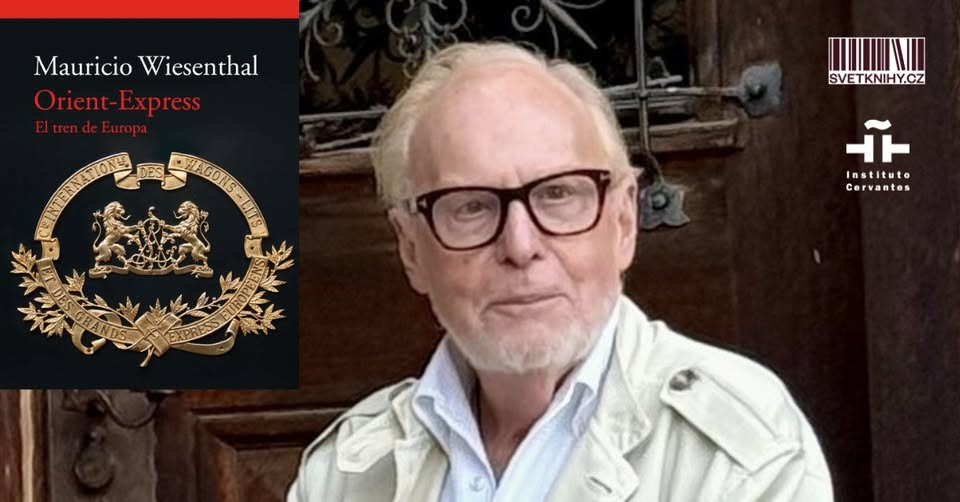
Orient-Express, paměť Evropy. Mauricio Wiesenthal na Světě knihy
Orient-Express, the memory of Europe. Mauricio Wiesenthal at the World of Books
Event by: Instituto Cervantes de Praga
Tickets: Get tickets
Talks & discussions
About event
As part of the World of Books Prague 2026 program and its focus on Europe and history, we invite you to meet the Spanish author Mauricio Wiesenthal.
Mauricio Wiesenthal, as the literary heir of Stefan Zweig, offers us an unforgettable journey through the memories of Europe. In "Orient-Express" there are stories of spies, disappearances, unsolved crimes and love relationships. However, the real main character is Europe. Europe defeated, as Wiesenthal says, by nationalism, populism, massification and vulgarity.
Mauricio Wiesenthal was born in Barcelona in 1943. He is the author of many books, has lectured on cultural history and has been a visiting lecturer at several universities. His credits include the 1984 essay Imagen de España (Image of Spain), which has been described as "a contribution to European culture comparable to the essays of Ortega y Gasset". In the 1979 book The Belle Époque of the Orient-Express, he recounts the history and legend of the most famous train of all time.
In 1985 he published a novel, El testamento de Nobel (Nobel's Last Will), which is "brimming with talent and, even more difficult, brimming with culture". An avid traveler, he published travelogues and studies on pre-Columbian cultures and Latin American countries. In 2015, he was awarded the Gold Medal for his merits in the field of visual arts and the Premio Revista de Occidente-Ámbito Cultural prize for his contribution to culture.
Entry with a valid ticket to World of Books Prague. In Spanish with simultaneous interpretation into Czech.
--------
El Orient Express, la memoria de Europa
En el marco de la Feria del libro y bajo el lemma de la edición 2026: Focus Europe, te invotamos a una conversación con uno de los escritores más europeístas de España en la actualidad, Mauricio Wiesentjal.
En "Orient-Express" de Mauricio Wiesenthal, hay historias de espías, desapariciones, crímenes sin resolver e historias de amor. Pero la verdadera protagonista es Europa. Una Europe defeated, according to Wiesenthal, by nationalism, populism, massification and vulgarity. Mauricio Wiesenthal, as the literary heir of Stefan Zweig, offers us an unforgettable trip through the memory of Europe. Entre sus obras destacan los ensayos La belle époque del Orient Express (1979) e Imagen de España (1984) y la novela El testamento de Nobel (1985).
Acceso con la entrada general a la feria. Aforo limitado por order de llegada. Actividad con traducción simultanea checo-español.
Su pensamiento y su estilo literario son herederos del gran legado cultural europeo, tradición en la que se inscribe su «Trilogía europea» (Libro de Réquiems, 2004; El esnobismo de las golondrinas, 2007; y Luz de vísperas, 2008). En esta editorial han aparecido Siguiendo mi camino (2013), Rainer Maria Rilke (2015), La hispanibundia (2018), Orient-Express (2020), El derecho a disentir (2021) y Las reinas del mar (2024).