This event has been ended!
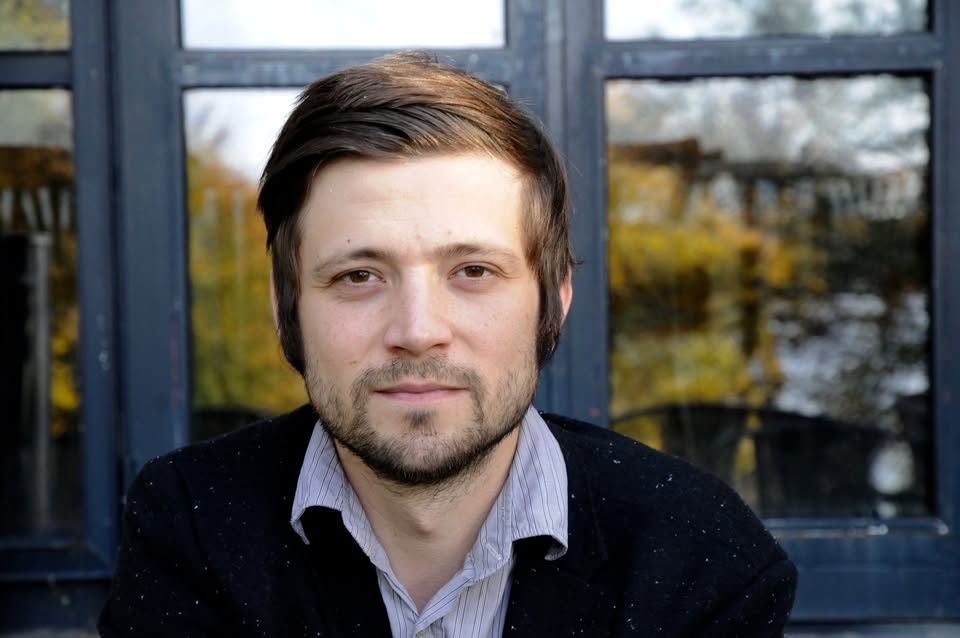
Organ & poetry - Alexandru Bulucz. An evening between language, memory and sound
Event by: Orgel & Lyrik
Location: Luisenkirche - Ev. Luisen-Kirchengemeinde, Gierkeplatz, Berlin - Bezirk Charlottenburg-Wilmersdorf
About event
The next episode:
"organ & poetry" (4) - Alexandru Bulucz. An evening between language, memory and sound
07. September 2025, Luisenkirche Berlin-Charlottenburg
With the fourth edition of "Orgel & Lyrik", the Luisenkirche Berlin-Charlottenburg extends its extraordinary concert format by a voice that impressively hikes between language spaces, cultures and times: Alexandru Bulucz, multiple excellent poet, translator and critic In the evening on September 7th, 2025.
organ & poetry-concert 4
Sunday, September 7, 2025, 7:00 p.m.
Luisenkirche Berlin-Charlottenburg, Gierkeplatz 4, 10585 Berlin
admission: 10 €, reduced 8 € (free for children up to 14 years, fleeing, fleeing, Berlin Pass owner: Inside)
U7 Richard-Wagner-Platz | U2 Bismarckstraße
In Alexandru Bulucz's poems we encounter an author whose language is permeated with biographical depth, linguistic precision and musical awareness.
born in Alba Iulia (Romania) in 1987, Bulucz came to Germany at just thirteen years. His early experience of language loss, migration, uprooting and cultural tension forms the resonance room of its poetry - and at the same time its poetic power center. Bulucz writes in German today, his work is awarded several times.
Bulucz ’poetry tirelessly asks about the beginning of the story - where home was lost and language becomes the only remaining home, from the search for a place in the word.
His poetry is never just autobiographical - it is also reflection and dialogue.
Bulucz does not shy away from commenting on his own poems in essays, critically questioning them to disclose their language layers. His sound is high, often worn, sensual and concrete. What can be described as an archaeological language work arises: a cross -border poetic process that oscillates between memory and myth, between sound and meaning.
In his poetry, influences sound from Franz Kafka to Mircea Eliade. And yet his voice remains - serious, tasting, at the same time open to the sound of the world in the here and now. Like Paul Celan, to which he refers, Bulucz also understands the poem as a form of handshake: as an offer of compassion, as a tender resistance against the cold of the circumstances. This not only marks a programmatic expansion, but also tells of the power of literary diversity as a new wealth in a society characterized by migration.
In the Luisenkirche, his texts meet works on works by large organ composers, played by the organist Jack Day, as well as its improvisations
The interaction of language and sound opens up a space in the poem and music. Horchen, interpret and expand each other. (1685–1750)
Preludium E-Moll, BWV 548
Part 2-Grief and Trost
Robert Schumann (1810–1856)
Study C-DUR (1562–1621)
psalm 116: I HEBB 'ran the army
Hope (?!)
Carl Philipp Emanuel Bach (1714–1788)
Sonate G-Moll-1st set
Lyric is the art form of language and one of the language oldest cultural techniques of humanity. The human voice is her instrument. The organ applies, Mozart called it as the "Queen of Instruments" and fills the greatest rooms with its finest tone with its abundance of sound and its richness of expression. Both royal disciplines now meet in a unique concert format.
Alexandru Bulucz is a lyric, translator, editor and critic. He was born in Alba Iulia in Romania in 1987. There he spent his first 13 years before emigrating to Germany with his family in 2000. He attended a sports boarding school and would have become almost professional basketball player. In 2008 he took the master's degree in German studies and general and comparative literary studies at the Johann Wolfgang Goethe University in Frankfurt am Main and others. at Werner Hamacher, which he completed in 2016.
Since 2013 he has published poetry in literary magazines and anthologies as well as articles and reviews in online info -milletons, print and radio. In 2015 he founded the philosophical series of discussions in the dialogue in the Edition Faust. The first volume of the series was mortal thoughts, a conversation with the philosopher Dieter Henrich.
He translated Jean-Luc Nancy from French and Alexandru vona, Eugène Ionesco, Moni Stănilă and Andra Rotaru from Romanian into German.
His poetry has been translated into several languages. He was a long-time editor of the online magazine Faust culture until April 2024, for which he has been writing since 2013. Since 2017 he has been discussing lyrical new publications for the "book market" of Deutschlandfunk.
Bulucz is co -founder of Pen Berlin and was two and a half years of his board member until November 2024. For poems from his second volume "What Petersilie knows about the soul" (2020), he received the Wolfgang Weyauch promotion award and a one-year work scholarship from the Berlin Senate. In June 2022, Alexandru Bulucz was awarded the Germany radio Prize at the Ingeborg Bachmann Prize for his lyrical prose text "a few national borders further east. Most recently, his band "Hours" appeared in 2024.
Jack Day has been a cantor at the Luisenkirche Berlin-Charlottenburg since 2017, where he headed the conception of the new Reil organ and developed the church into a place for radio services. In 2024 he realized a concert series funded by the Berlin Senate Department with organ concerts by C.P.E. Bach and Handel. His projects include solo concerts on historical instruments, appearances in the Babylon Kino Berlin and guest appearances at renowned festivals such as the organ of the Cinema Festival in Lubin, the Philharmonie Gdańsk and at Trinity College Cambridge. Jack Day was awarded the 2nd Prize of the International Gabler Organ Competition and the Knecht Prize of the City of Biberach (both 2021) and completed his master's degree in organ improvisation at the Stuttgart University of Music 2024. 1988 at the GDR Academy of Sciences in Berlin-Ost. After his departure from the GDR, in 1988, he founded and headed the Berlin literary workshop since 1991 and since 2016 the house for poetry, as well as the Poesiefestival Berlin, the Zebra Poetry Film Festival and the Open Mike. He initiated and headed major international projects such as the Literature Express Europa 2000 or the global website lyricikline.org.
Photo (c) Renate von Mangoldt