This event has been ended!
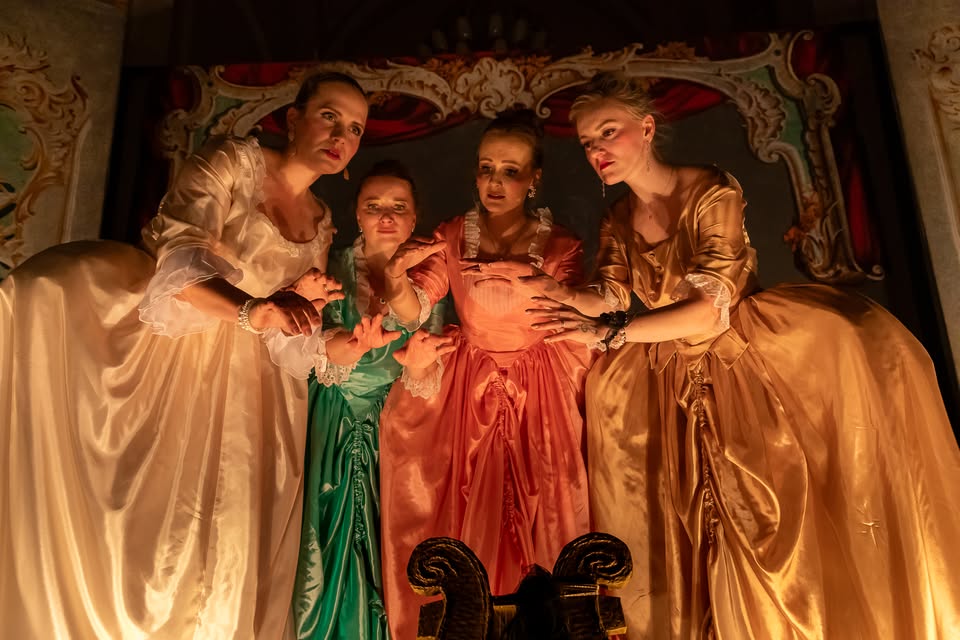
Opera 2025: Kantáta o Mozartově smrti a Holoprtské posvícení
Opera 2025: Cantata about Mozart's death and Holoprt's feast
Event by: Ensemble Damian
Location: Holandská 669/1, Holandská 1, Praha 10
About event
Jan Josef Rösler: Cantata about Mozart's death
Jan Branžovský: Holoprt's feast
Director: Tomáš Hanzlík
Cantata about Mozart's death
Thalia - Markéta Israel Večeřová
Polyhymnia - Veronika Kaiserová Muse - Hana Solanská
IV. Muse - Dorota Grossová
Petra Matějová - Hammer Piano
Martin Smutný - Positiv
Chmelík
Dorrant - Arnau Petřivalský
Redvuta - Andrea Suchomelová
Minka - Anežka Procházková
Ponocný - Nil Petřivalský
The modern premiere of a funeral composition from 1798 and Czech singers from Třebechovice pod Orebem.
Although it may seem at first glance that these two songs are very distant, they have surprisingly much in common. Both musicals have been preserved unique in the Archive of the Prague Conservatory, and only in the version of the piano elevator. Both relate to Mozart's person. In the case of Rösler in theme and stylish and in the case of Branžovský style and transforming his music into a new form. Piano elevators were for the production of Ensemble Damian - based on the period documented practice on playing solo piano sonatum with Continuu procession - enriched with the accompaniment of an organ positive. In the case of cantata, the work thus brings the work to the sacral environment, in the case of Holoprt's feast mechanical playing instruments from the turn of the 18th and 19th centuries.
Young Rösler has been employed since 1795 as a bandleader at the Estates Theater and it can be assumed that the cantata of Mozart's death was heard with local musicians right here, in the place of Mozart's largest triumphs, in a memorial semi -cenic form. Muses - the goddess of creative artistic inspiration - a mourning of the deceased genius - perform in the cantata.
about the life and work of the composer, translator, actor, dramaturg and agile patriot Jan Branzovsky (31. 1790 Trebechovice p. Oreb, -?) We have little information. He was the son of the locksmith John and his wife Anna roz. Vintrová. His younger brother Václav (1801–1874) became a priest in Chotusice and his property comes from the surviving score of the Veselá Misence. Jan Branžovský studied first in Prague, where he was probably a vocalist. After the mutation he returned home and continued at the grammar school in Hradec Králové (1807–10) and Litomyšl (1811–14). His trail after 1814 disappears. According to the literature captured in his hometown he worked as active theater, he was the soul of Třebechovice amateur theater: he played comic tasks, studied and managed performances and translated and edited texts, composed into every game and wrote Arias, duets and churches for artists. We have preserved only the singer for the Czech translation of E. Schikaneder Die Lyranten Oder Das Lustige Elend, singing figures for the singer of Holoprt's feast (the author of the text or year is unknown) and orchestral prelude to the knight Odalinský or the innocent revenge of the murder. It became a modification for piano and positive sinphonia to study the Holoptic feast. Branžovský in the first twenty bars quotes the theme of Mozart's piano sonats C minor KV 457, but in the major key, further musical development is independent. The plot is reconstructed on the basis of the indications contained in singing numbers, versed dialogues were completed by Marek Řihák. The music contained in two places where the leaves were taken out of the manuscript were completed due to the periodic construction.