This event has been ended!
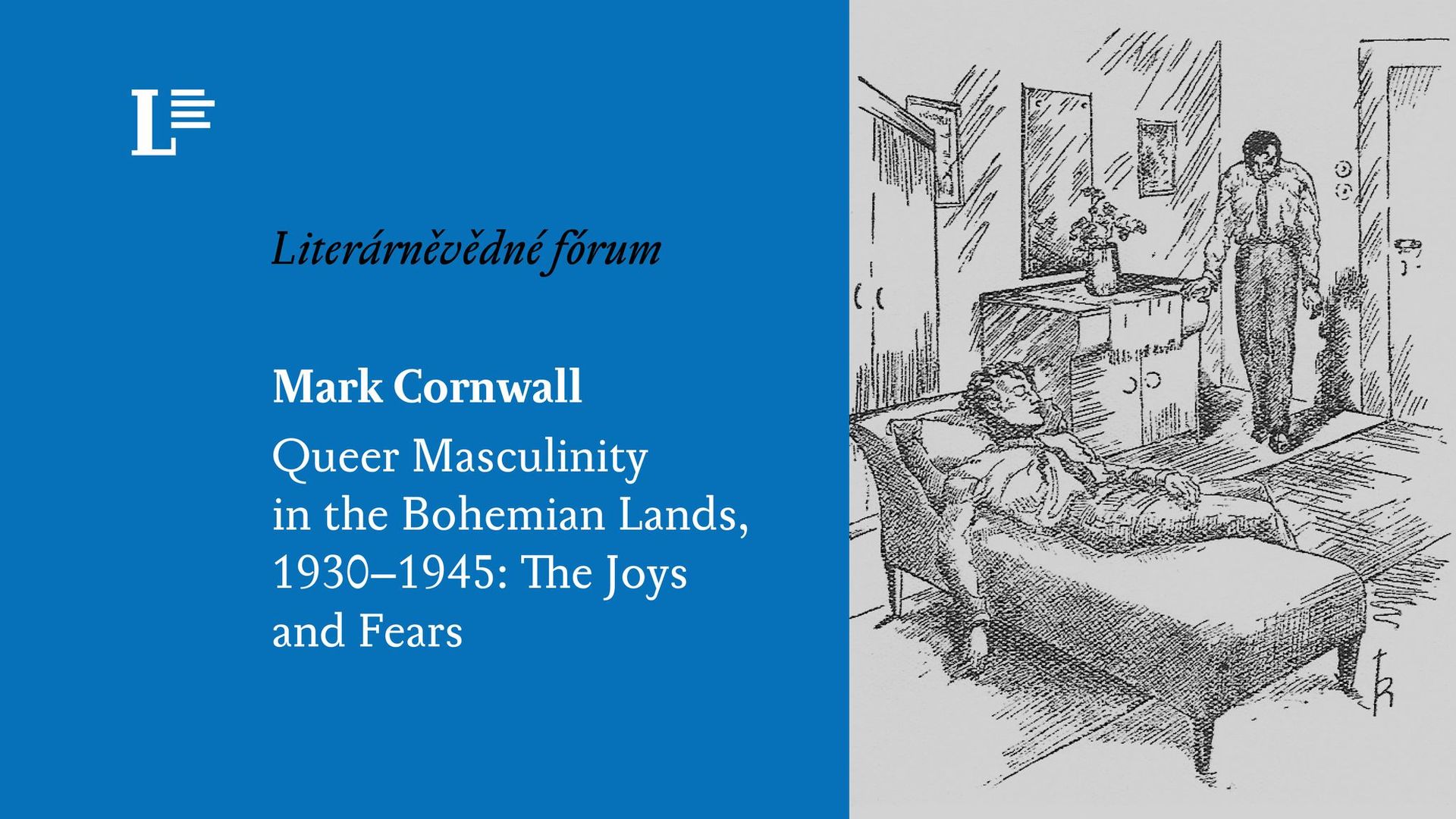
Mark Cornwall – Queer Masculinity in the Bohemian Lands, 1930–1945: The Joys and Fears
Event by: Ústav pro českou literaturu AV ČR
Location: The Institute for Czech Literature, v.v.i., Na Florenci 1420/3, Praha 1
About event
On Tuesday, June 9, 2026, from 4 p.m., Mark Cornwall (University of Southampton) will speak as part of the Literary Studies Forum lecture series, which this semester focuses on the historical transformations of masculinity from the 19th century to the present, with the contribution "Queer Masculinity in the Bohemian Lands, 1930–1945: The Joys and Fears".
You can listen to the lecture in English in the lower hall Institute for Czech Literature of the Academy of Sciences of the Czech Republic (Na Florenci 1420/3), admission is free and without registration.
Annotation:
This lecture explores the different facets of queer masculinity in the Bohemian lands in the 'radical' years of the mid-twentieth century. Through new literary and legal sources, it is possible to uncover both the joys and anxieties which came when individuals tried to express their sexuality in a heteronormative world. The 1930s witnessed heightened activism, especially in Prague, on behalf of homosexual emancipation. The result was a range of texts – including journals and novels – which provide vivid insights into how queer individuals lived their lives and explored their sexual identity. However, while there was a burgeoning Prague sub-culture which encouraged homosexuals to be more confident, the political, legal and social framework in Czechoslovakia was still repressive. Thus, the sources confirm a depressing environment where suicide and blackmail were commonplace, regularly reported in the Czech press. For many individuals, the reference points for a better life seemed to be abroad in foreign countries. Others did manage to find homosocial milieux at home where they could subtly express their sexuality in plain sight. During the war years, under the Nazi Protectorate, queer lives were naturally even more circumscribed. Yet the evidence from court cases reveals how queer men could still find sexual outlets for pleasure, even if 'abnormal' behavior was scrutinized in society. From 1930 to 1945 therefore, some men actively asserted their own interpretation of masculinity. They did so in the face of heteronormative regimes but also neighbors whose attitude was uncertain in terms of their tolerance or disapproval.