This event has been ended!
Women of power - Prussia beyond Fritz and Wilhelm - One hour of history live
Event by: Humboldt Forum
Location: Schloßplatz, Schloßplatz, Berlin - Mitte
Tickets: Get tickets
About event
[English below] Women of power - Prussia beyond Fritz and Wilhelm - One hour of history live
The history of Prussia is usually told as a series of men's biographies. But the ruling Hohenzollerns were a dynasty, meaning political power was passed down through the biological family. And that means it didn't work with just men. Consequently, the female Hohenzollerns played a central role both in the development of Prussia and Berlin and as networkers for their family at other courts in Germany and Europe. In the historiography of the 19th and 20th centuries, this was deliberately swept under the carpet because it did not fit Prussia's masculine image. This image should finally be broken down.
“An Hour of History” approaches this using the example of two women: Sophie of Brandenburg (1568-1622), who exercised government power as an electress in Saxony for ten years, and Elisabeth Christine of Braunschweig-Wolfenbüttel (1715-1797), who fulfilled her role as Queen of Prussia under difficult conditions filled out.
More information: https://kurzlinks.de/zyve
___
[EN] Women of Power - Prussia beyond Fritz and Wilhelm
The history of Prussia is usually told as a series of male biographies. However, the ruling Hohenzollerns were a dynasty, meaning that political power was passed down within the biological family. And that meant it couldn’t be done with men alone. Consequently, the female Hohenzollerns played a central role both in the development of Prussia and Berlin and as networkers for their family at other courts in Germany and Europe. In 19th and 20th century historiography, this was deliberately swept under the carpet because it did not fit in with Prussia's masculine image. It is time to finally break with this image.
“One Hour of History” approaches this topic using the example of two women: Sophie of Brandenburg (1568-1622), who exercised governmental power for ten years as Electress of Saxony, and Elisabeth Christine of Brunswick-Wolfenbüttel (1715-1797), who fulfilled her role as Queen of Prussia under difficult conditions.
More information: https://kurzlinks.de/4qh5
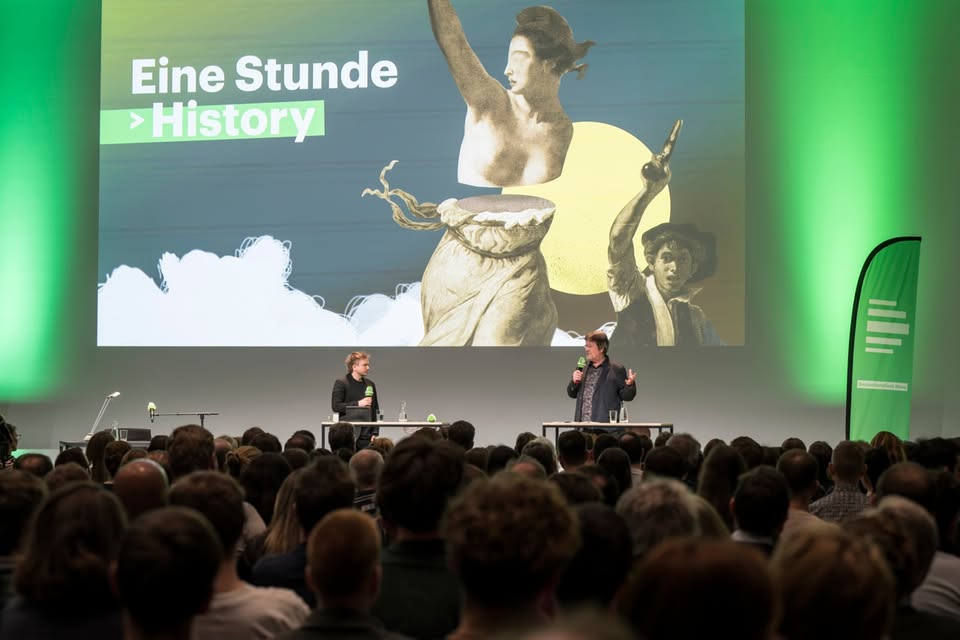
Picture credits: "One hour of history live" on the topic "On the Barricades - The 1848 Revolution in Berlin", in cooperation with Deutschlandfunk Nova on the Weekend of Democracy in the Humboldt Forum, March 2023 © Stiftung Humboldt Forum in the Berlin Palace/ Photo: Stefanie Loos