This event has been ended!
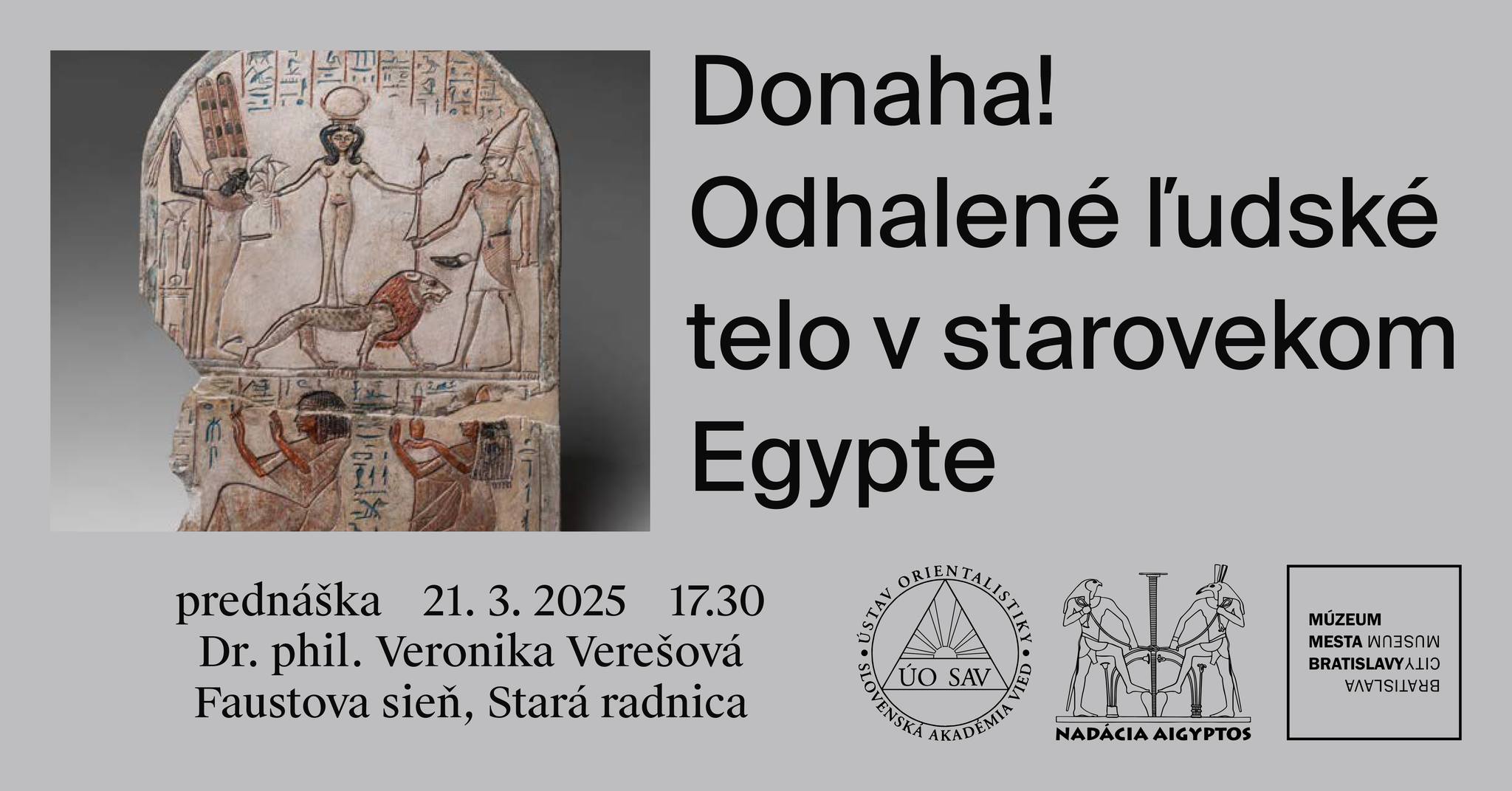
Donaha! Odhalené ľudské telo v starovekom Egypte
Donaha! Revealed human body in ancient Egypt
Event by: Múzeum mesta Bratislavy, Aigyptos
Location: 815 18, Radničná 577/1, Radničná 1, Bratislava
About event
The naked human body and revealing some of its parts is one of the most natural, but at the same time one of the most proofing phenomena in human history. It was already the case in ancient Egypt, where nudity had various meanings. These, of course, depended on the context in which it appeared - on practical daily activities to ritual and religious practices and depictions.
𓀀 𓀂 𓀂 𓀃 𓀃
Nudity was a necessity for the poor and workers who could not afford expensive clothes and would limit their clothes at work. On the other hand, it was an important symbol of innocence, youth and fertility, but also poverty, defeats and humiliation. Last but not least, it was perceived erotic and magically, and therefore had the potential to awaken not only the senses, but literally deceased in the world.
𓀀 𓀂 𓀂 𓀃
Together we will look at when and under what circumstances the body was revealed natural and when it was religious. What was the difference between a naked ordinary mortal, the Egyptian monarch and the deity? Did the ancient Egyptians perceived nudity differently than we do today?
𓀀 𓀁 𓀁 𓀁
Veronika Verešová is a graduate of classical archeology at the University of Trnava, Egyptology at the University of Vienna, and she received a doctorate at the Institute of Classical Archeology of the University of Vienna. She is a member of the Board of Directors of the Aigeptos Foundation and a researcher at the Institute of Orientalism of the Slovak Academy of Sciences. It deals mainly with the Aegean bronze times, the second transitional period and the new Empire in Egypt, history and material culture and intercultural relations in the Eastern Mediterranean of the Bronze Age. Since 2008 she has been a member of the Polish-Slovak mission in Tell El-retreat.
More events: Múzeum mesta Bratislavy
- Minidejisko 🐟 Vyza a prešporskí rybári (rodinný program) ·
- hmmm...🏺: Cozy Antiques (keramický workshop) ·
- Súčasná klubová scéna: 🪩 Odolnosť a solidarita? (diskusia) ·
- Medzi eufóriou a vyčerpaním: 💃 Predstavy slobody (kurátorská prehliadka) ·
- Mysterium Magnum alebo o počiatkoch spracovania pravekej medi 🏺(odborná prednáška a workshop) ·
Events in Bratislava today · Events in Bratislava this weekend